

San Antonio · Texas
Water Softener Salt Options: Pellets, Potassium, Brands & What Really Matters
★★★★★ 5-Star Rated · Trusted in Bexar County
BBB Torch Award 2020
Licensed & Insured
In-House Team

When it comes to your water softener, salt may not seem like the most exciting topic… until you’re standing in the aisle staring at five different bags wondering, “Does the brand matter? Pellets or crystals? Sodium or potassium? Am I about to mess up my system?”
Good news: it’s simpler than it looks.
For Puronics Water Treatment Systems, pellet salt is the recommended choice, but most softener systems can operate with different types of sodium chloride or potassium chloride. The biggest key is not obsessing over the brand. It is choosing the right style of salt, using it consistently, and keeping your brine tank properly filled.
The Best Salt for Most Water Softeners: Pellets
At APEX Smart Home, we generally recommend water softener pellets for most homeowners. Pellets are clean, easy to pour, widely available, and typically dissolve in a predictable way inside the brine tank.
Puronics systems recommend pellet salt because it helps support consistent brine production, which is what allows your softener to regenerate properly and continue removing hardness minerals from your water.
In simple terms: Pellet salt helps your softener do its job without making things complicated.
Does the Brand Matter?
Not as much as people think.
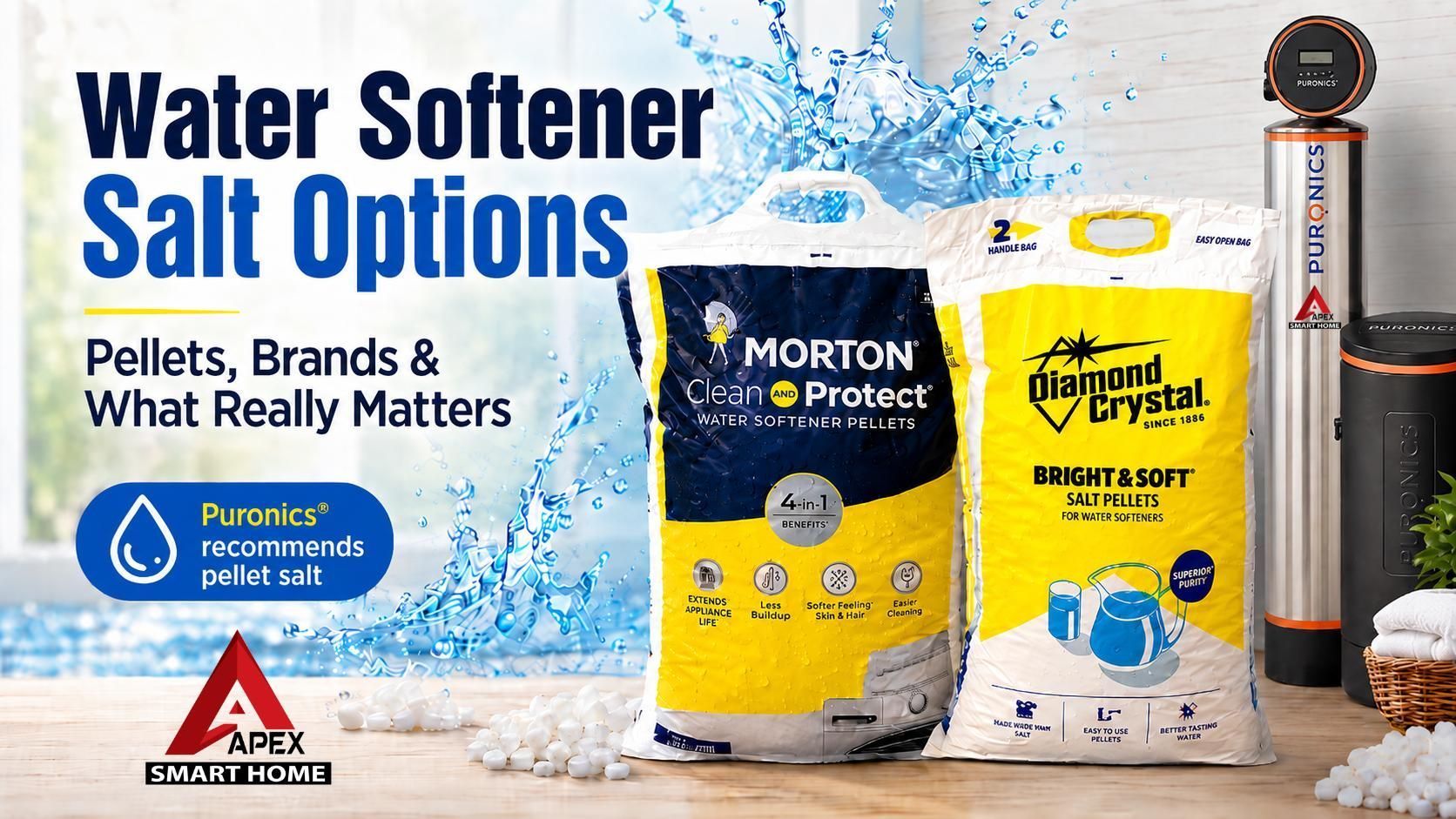
You may see brands like Morton, Diamond Crystal, or store-brand softener salt. While we personally tend to prefer Morton because it is easy to find and has a strong reputation, the brand is less important than the type and quality of salt.
What matters more is:
- Use pellets whenever possible.
- Stick with the same type of salt.
- Keep the brine tank around half full.
- Avoid letting the system run completely empty.
Switching brands is usually not a big deal. Switching types constantly is where things can get a little less predictable.
Sodium vs. Potassium: Which One Should You Use?
Most water softeners use sodium chloride, which is standard water softener salt. This is what most pellet salt bags contain.
Potassium chloride can also be used in many systems and is sometimes chosen by homeowners who want to reduce sodium discharge or prefer a sodium alternative. However, potassium is usually more expensive and may require some adjustment depending on the system settings and water conditions.
For most homes, sodium pellets are the most practical option. Potassium can be a good alternative, but it is not usually necessary unless you have a specific reason for choosing it.
Pellets vs. Crystals vs. Blocks
Here’s the quick breakdown:
Pellet Salt
This is our preferred option. Pellets are compact, clean, consistent, and work well in most modern water softeners, including Puronics systems.
Crystal Salt
Salt crystals can work, but they may be more prone to buildup, bridging, or inconsistent dissolving depending on the tank, humidity, and water usage. Some systems handle crystals fine, but pellets are usually the safer recommendation.
Block Salt
Block salt is less common and is typically only recommended for systems specifically designed for it. Unless your equipment manufacturer or installer tells you to use block salt, pellets are the better choice.
What Is a Salt Bridge?
A salt bridge happens when the salt forms a hard crust or empty pocket inside the brine tank. The tank may look like it has salt, but underneath, the water is not properly touching and dissolving the salt.
This can cause the softener to stop making brine, which means the system cannot regenerate correctly.
Using pellet salt, avoiding overfilling, and checking the tank occasionally can help reduce the chance of bridging.
How Full Should the Brine Tank Be?
A good rule of thumb is to keep the brine tank around half full.
You do not need to fill it all the way to the top. In fact, overfilling can make it harder to spot salt bridging or mushy salt buildup.
Keeping it around half full gives the system plenty of salt while still allowing you to visually inspect the tank.
Should You Let the Salt Run Out?
Try not to.
If the brine tank runs completely out of salt, your water softener may not regenerate properly. That means hard water can start making its way back into the home.
If the tank does run empty, refill it with pellet salt and give the system time to regenerate. Depending on the system and water usage, it may take a little time before the water feels soft again.
Our Simple Recommendation
For most homeowners with a Puronics Water Treatment System:
- Use pellet salt.
- Choose a reliable brand like Morton or Diamond Crystal.
- Stay consistent with the type of salt you use.
- Keep the brine tank about half full.
- Check it regularly, especially if your household uses a lot of water.
Final Thoughts
Buying water softener salt does not need to feel like picking out a science project. While there are different brands and options available, the best choice for most homes is simple: quality pellet salt used consistently.
Whether you grab Morton, Diamond Crystal, or another trusted pellet salt, your system will be happiest when the brine tank stays clean, consistent, and properly filled.
And remember, your water softener is doing a lot of work behind the scenes. Give it the right salt, and it will keep helping protect your plumbing, appliances, fixtures, and comfort every day.