San Antonio · Texas
How Much Does a Whole-Home Water Softener Cost in San Antonio, Texas?
★★★★★ 5-Star Rated · Trusted in Bexar County
BBB Torch Award 2020
Licensed & Insured
In-House Team
Looking for Reliable Security Camera Installation in San Antonio?
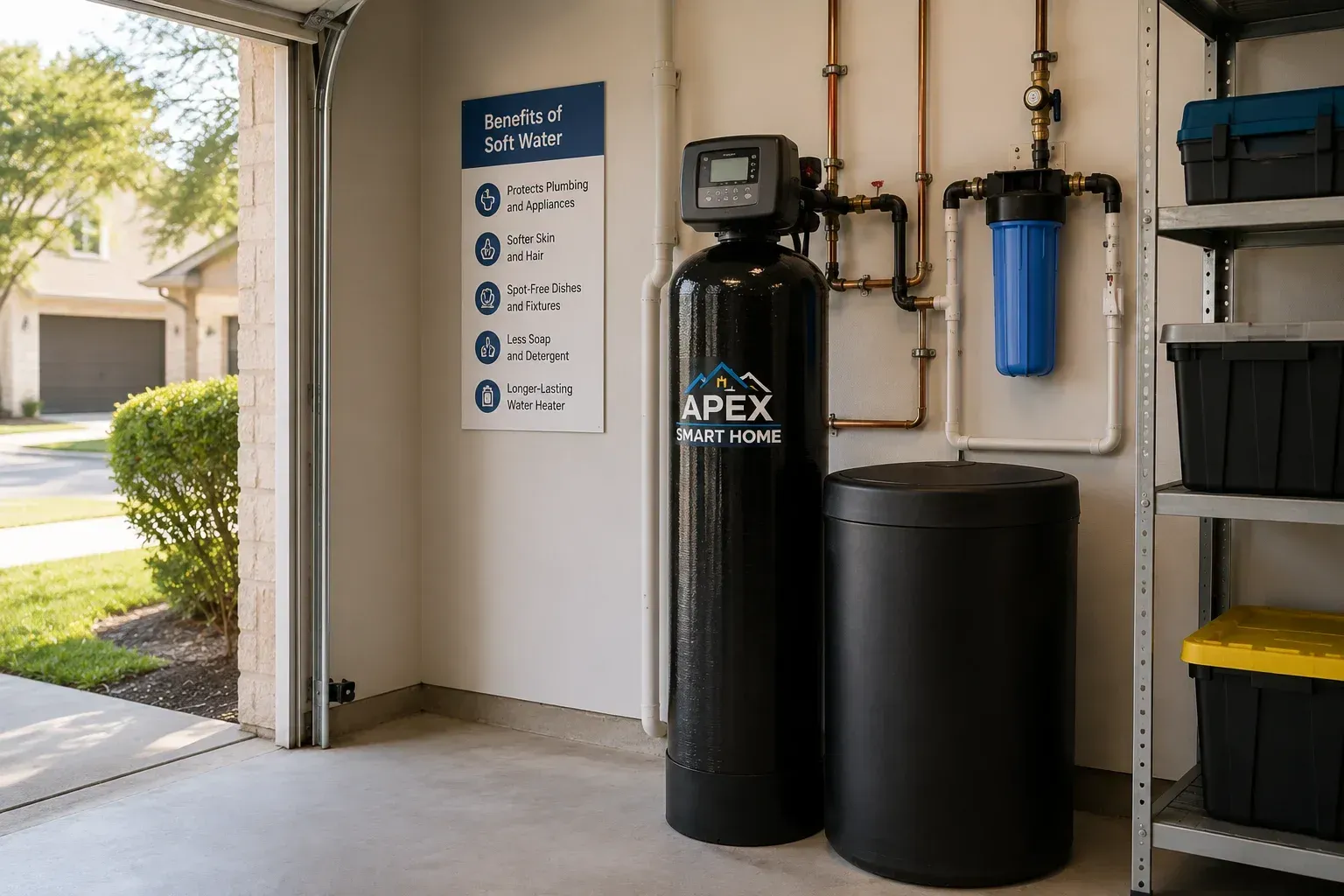
Table of Contents
- Introduction
- What a Whole-Home Water Softener Costs in San Antonio
- Why San Antonio Water Is So Hard
- The Main Factors That Affect Price
- Installation Costs and What They Cover
- Ongoing Maintenance and Operating Costs
- What a Softener Does for Your Plumbing and Appliances
- Limitations to Keep in Mind
- How to Compare Quotes Fairly
- Conclusion
- Not Sure What a Water Softener Will Cost Your Home?
- Frequently Asked Questions
Key Takeaways
- Most San Antonio homeowners spend somewhere between $1,500 and $6,000 for a whole-home water softener, installed. Basic systems sit at the low end, while larger or more advanced setups cost more.
- San Antonio water is among the hardest in the country, often measuring 15 to 20 grains per gallon. Harder water usually calls for a higher capacity system.
- System size, water hardness, plumbing layout, and the type of softener all affect the final price more than the brand name does.
- Ongoing costs are modest but real. Plan for salt refills, occasional service, and a small bump in your water and electric use.
- The cheapest quote is not always the best value. An undersized system wears out faster and softens poorly, which can erase any upfront savings.
Introduction
A whole-home water softener in San Antonio typically costs between $1,500 and $6,000 installed, with most homeowners landing in the $2,500 to $4,500 range. Where you fall in that range depends on the size of your home, how hard your water is, the type of system you choose, and how much plumbing work the installation requires.
That is a wide range, and it exists for a reason. A two-bathroom starter home on the far West Side has different needs than a five-bedroom house in Stone Oak, and the equipment is sized accordingly. This guide breaks down each cost factor so you can read a quote and understand what you are actually paying for.
Water hardness is not an abstract problem here. San Antonio sits on the Edwards Aquifer, which produces some of the hardest municipal water in the United States. If you own a home in this area, a softener is one of the more common upgrades people consider, and knowing the real numbers helps you plan for it.
What a Whole-Home Water Softener Costs in San Antonio
Prices break down roughly into three tiers.
Entry-level systems ($1,500 to $2,500 installed). These are smaller capacity salt-based softeners, usually 32,000 to 40,000 grain units. They work fine for smaller homes with one or two bathrooms and moderate water use.
Mid-range systems ($2,500 to $4,500 installed). This is where most San Antonio households land. You get 48,000 to 64,000 grain capacity, metered regeneration that only runs when needed, and better valves that last longer.
High-capacity and premium systems ($4,500 to $8,000+ installed). Larger homes, homes with high water use, or setups that combine softening with whole-home filtration or carbon treatment fall here. Some homeowners also pay more for systems certified to stricter standards or built with longer warranties.
These figures cover equipment plus professional installation. Equipment alone runs cheaper, but most homeowners in this area hire the work out because it involves cutting into the main water line.
Why San Antonio Water Is So Hard
Hardness is measured in grains per gallon (gpg). Anything above 10.5 gpg is considered very hard. San Antonio water commonly tests between 15 and 20 gpg, depending on the neighborhood and the time of year.
The reason is geology. Water from the Edwards Aquifer travels through limestone, picking up calcium and magnesium along the way. Those minerals are not harmful to drink, but they build up as scales inside pipes, water heaters, and fixtures.
Hardness matters for cost because softeners are sized by how many grains of hardness they can remove between regeneration cycles. Harder water uses up capacity faster, so San Antonio homes often need a larger unit than the same size house would in a city with softer water.
Before buying anything, get your water tested. Some installers test for free during an estimate, and independent test kits cost under $30. The result tells you what capacity actually makes sense.
The Main Factors That Affect Price
System Capacity and Household Size
Capacity is the biggest price driver. Sizing is based on a simple calculation: people in the home, multiplied by daily water use (usually estimated at 75 gallons per person), multiplied by your water hardness. A family of four with 18 gpg water uses roughly 5,400 grains per day, which points to a 48,000 grain system regenerating about once a week.
Undersizing to save money backfires. The unit regenerates constantly, burns through salt, and wears out early.
Type of Softener
Salt-based ion exchange systems are the standard and the most effective at actually removing hardness minerals. Salt-free conditioners cost a similar amount but work differently. They alter how minerals behave rather than removing them, so they reduce scale buildup without producing truly soft water. Dual-tank systems, which provide soft water even during regeneration, add $500 to $1,500 to the price.
Plumbing Layout and Access
A home with a water softener loop already stubbed out in the garage is a quick install. Many newer builds in the San Antonio area include one. Older homes without a loop need one added, which can add $300 to $800 or more depending on where the main line runs and how accessible it is.
Drainage and Electrical
Salt-based softeners need a drain for regeneration discharge and a standard outlet nearby. If neither exists where the unit will sit, running them adds cost.
Extras Bundled In
Quotes sometimes include a bypass valve, a pre-filter, or a carbon filtration stage for chlorine taste and odor. These are legitimate additions, but they change the price, so make sure you are comparing quotes with the same scope.
Installation Costs and What They Cover
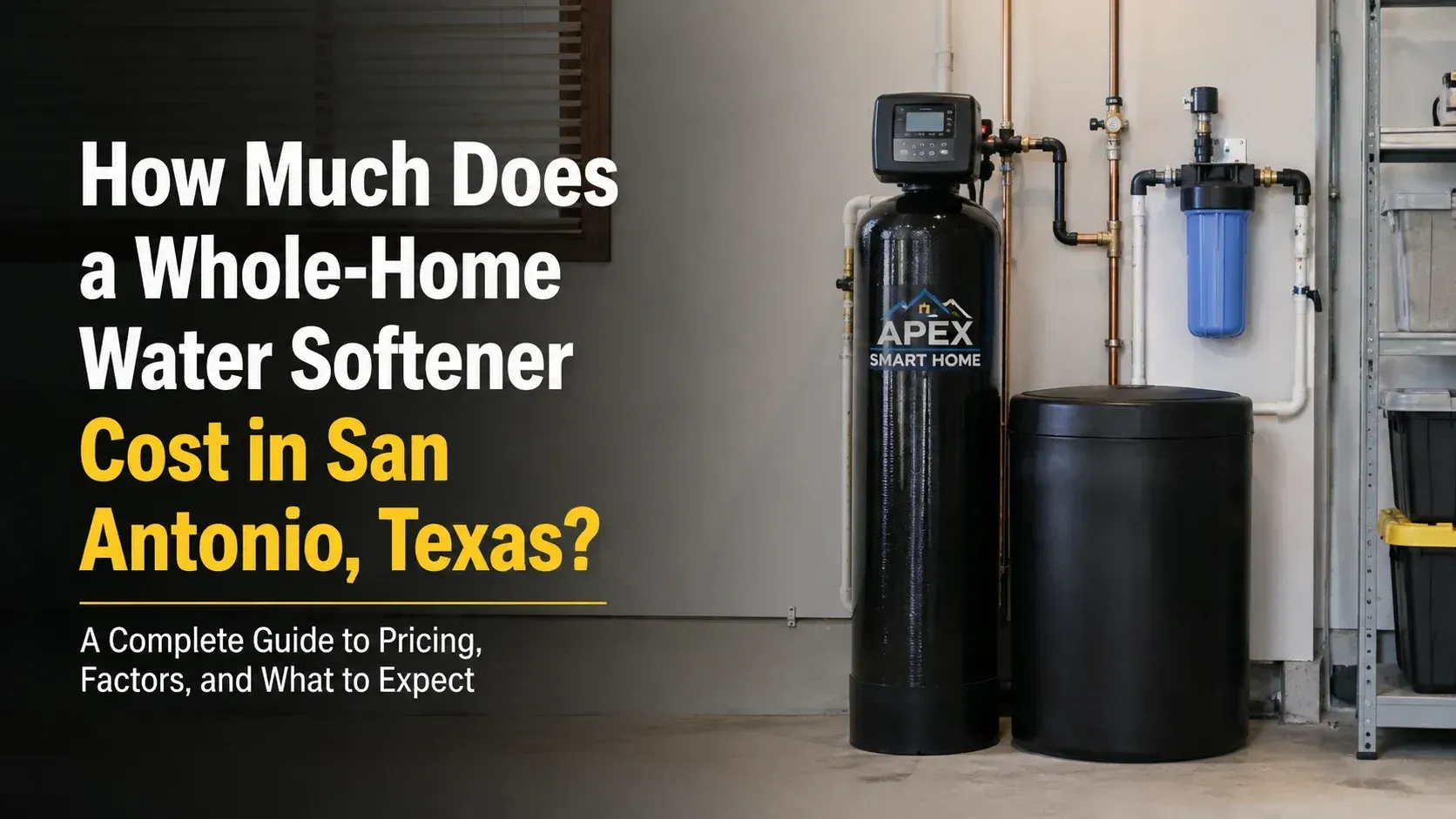
Professional installation on its own generally runs $300 to $1,000 in this market. That figure covers mounting the unit, tying into the main line, connecting the drain, programming the valve based on your tested hardness, and checking for leaks.
Permits are worth asking about. Plumbing modifications in San Antonio and surrounding cities may require a permit depending on the scope of work, and a licensed installer should be able to tell you what applies to your address.
Timing also matters a little. If you are already remodeling, adding a loop while walls are open costs less than retrofitting one later. Some homeowners fold the softener into a larger project for that reason. There is more background on installation timing if you are weighing when to do it.
Ongoing Maintenance and Operating Costs
A softener is not a buy-it-and-forget-it appliance, though the upkeep is light.
Salt. Expect to add a 40 lb bag every 4 to 8 weeks, depending on water use and hardness. At $6 to $12 per bag, that is roughly $50 to $150 per year. The choice between pellet types and potassium chloride affects that budget, and there are real differences worth understanding between softener salt options before you commit to one.
Water and electricity. Regeneration uses 25 to 65 gallons of water per cycle and a small amount of power. On a metered system regenerating weekly, the impact on your utility bill is minor, typically a few dollars a month.
Service. Resin beds last 10 to 15 years in most cases, though very hard water and chlorine can shorten that. An occasional professional checkup, cleaning, or valve rebuild keeps the system honest. Budget for a service visit every few years rather than assuming zero cost.
Lifespan. A properly sized, maintained unit commonly lasts 10 to 20 years. Cheaper big-box units tend toward the shorter end.
What a Softener Does for Your Plumbing and Appliances
The case for softening in San Antonio is mostly about protecting what you already own. Scale from hard water coats the inside of water heaters, forcing them to work harder and shortening their service life. It clogs faucet aerators and showerheads, leaves spots on dishes, and stiffens laundry.
Softened water slows or stops that buildup. Appliances such as dishwashers and washing machines tend to run more efficiently without scale, and soap and detergent lather better, so many households use less of both. None of this shows up as a single dramatic saving. It shows up as fewer early appliance replacements and less descaling work over the years.
If you want a deeper look at how these systems work and what is involved in choosing one, the water softener service page covers the equipment side in more detail.
Limitations to Keep in Mind
A softener is not a filter. It removes calcium and magnesium, not chlorine, sediment, bacteria, or dissolved contaminants. If taste or filtration is your goal, that is a separate piece of equipment, sometimes paired with a softener.
Salt-based systems also add a small amount of sodium to the water. The amount is low, but people on strict sodium-restricted diets sometimes choose potassium chloride instead, which costs more per bag.
Finally, some people simply prefer the feel of hard water in the shower. Softened water can feel slick at first. It is a normal characteristic, not a malfunction, but it surprises some new owners.
How to Compare Quotes Fairly
Get your water hardness number first, then ask each installer to size their proposal from it. When quotes come in, check that they cover the same things: grain capacity, valve type, loop or plumbing work, drain and electrical, permits if needed, warranty length, and who handles service later.
A quote that looks cheap because it skips the loop installation or uses an undersized tank is not actually cheap. Ask what is excluded. A straight answer to that question tells you a lot about the company.
Conclusion
In San Antonio, a whole-home water softener is a $1,500 to $6,000 project for most households, with the middle of that range being the most common outcome. The price is driven by capacity, water hardness, plumbing access, and the type of system, and it comes with modest ongoing costs for salt and occasional service.
The most useful step you can take costs almost nothing: test your water, learn your hardness number, and size any system from real data rather than a guess.
Homeowners who do that tend to buy once, buy the right size, and avoid the cycle of undersized equipment failing early. Whatever you decide, decide it with your own numbers in hand.
Not Sure What a Water Softener Will Cost Your Home?
If you are still weighing options, a short call can help you sort through them. It is a chance to ask questions about your home's water, sizing, and installation requirements, with no obligation attached. The goal is simply to give you accurate information so that whatever decision you make is an informed one.
Contact us today!
Frequently Asked Questions
How hard is the water in San Antonio?
Most of the city tests between 15 and 20 grains per gallon, which is classified as very hard. Hardness varies slightly by neighborhood and season, so a test of your own tap water gives the most accurate number.
What size water softener does a family of four need in San Antonio?
With water in the 15 to 20 gpg range, a family of four typically needs a system in the 48,000 to 64,000 grain range. Actual sizing should be based on your tested hardness and daily water use.
Does a water softener increase my utility bills?
Slightly. Regeneration uses 25 to 65 gallons of water per cycle plus a small amount of electricity. For most households on a metered system, the added cost is a few dollars per month.
Can I install a water softener myself?
It is possible if you are comfortable cutting into your main water line and your home already has a softener loop. Most homeowners hire a licensed installer because mistakes at the main line can cause leaks, and some plumbing work may require a permit.
How long does a water softener last?
Most quality units last 10 to 20 years. The resin bed usually needs replacement after 10 to 15 years, and regular maintenance, correct sizing, and pre-filtering chlorine all help extend the working life.
Related Posts